Posted on

How saleable is your home? Take our saleability quiz and find out!

There’s a sense of security that comes with knowing how saleable your home is – whether you plan on jetting off and buying in Marbella or you just fancy a change, getting your home on the market and sold can prove quite the challenge.

And with the recent dip in the average price of UK property of 1.3% as of August 2022, as reported by Rightmove, you may be wondering just how much you could get for your home.

But first, let’s address the elephant in the room: house prices.

Current house prices are in line with summer price trends over the last decade – the recent dip in value is completely normal, and there is absolutely no need to worry.

Besides, the rest of the year looks promising – as we all settle back down and pack up the deck chairs and garden furniture, house prices are expected to rise again before the end of the year.

But with that out of the way, the remainder of this article will discuss more on saleability – specifically, key things you should look out for, alongside our saleability quiz to help you determine just how saleable your home is. Exciting, right?

How saleable is your home?

Before we get around to the saleability quiz, let’s discuss the factors that determine whether your home is ready for the market.

All homes are saleable, but to get the best price for your four walls and pride and joy, you may wish to consider the following factors:

  • What is the neighbourhood like?
  • Where is your home based?
  • How big is your home?
  • What condition is your home in?

Keep reading to find out how each factor affects saleability – these aren’t the be-all and end-all (so don’t panic), but they are definitely worth considering.
What is the neighbourhood like?

It’s no secret that homes in nicer neighbourhoods typically sell for more.

People pay more for increased security, peace of mind, better schools, local amenities, and so forth. And who can blame them?

If you live in a nice neighbourhood, your saleability goes up.

And if you don’t live in the best of neighbourhoods, then don’t worry – there are many other factors that will also be taken into consideration.

Where is your home based?

Alongside the neighbourhood, the location of your home is just as important.

Is your home close to a motorway? Do you live near to local attractions? Are you a five-minute drive from the shops but in the heart of the countryside?

The location matters – it massively determines the value and the attraction of your advert or online listing.

Now, you can’t exactly move your home, but understanding how location affects the price and overall attraction is useful.

How big is your home?

The size of your home directly impacts the valuation – how many bedrooms and bathrooms does the home have?

Buyers often pay per square foot, but the price varies massively depending on the location – a four-bedroom home in central London is worth considerably more than a four-bedroom home in the heart of the countryside. Scenic or not, people pay for location.

What’s most important is liveable space – the kitchen, bedrooms and bathrooms are also key selling points.

A large modern kitchen will increase saleability much more than an old worn-down wooden kitchen that’s decades old.

Consider a simple renovation before listing your home on the market to further increase value and saleability. We promise, it’s worth every penny!
What condition is your home in?

A home in good condition is usually one that performs well on the market.

Typically, most buyers would rather purchase a home that, well, looks like a home. Add those finishing touches, add a fresh lick of paint and a little bit of love, and give prospective buyers a glimpse into what makes your home so great.

As a general rule of thumb: it’s always a good idea to clean up and perform a few basic repairs around your home (if needed) before seeking a valuation.

That means tidying up those wires, repainting the skirting boards, and fixing that extractor fan for good (come on, nobody likes mould).

A little bit of hard work goes a long way – you can increase the value of your home drastically; don’t neglect those quick fixes and repairs.

Saleability quiz

It’s not just about the physical condition of your home (although this is very important), but the saleability of your home is also heavily tied to:

  • Your estate agent
  • Your brochure
  • Your online advert
  • The price
  • If you prepare your home for viewings

But it doesn’t end there – you need to be in regular contact with your estate agent, your brochure must show the best of your home, you need to dress and prepare your home for viewings and the price must sit within a realistic bracket.

Add all these factors together, and you’ve got a saleable home. It’s that simple!


Take the Stonehouse Homes saleability quiz and find out just how saleable your home is below!

https://www.dropbox.com/s/vod0m43agh2oxfd/Saleability%20Quiz.docx?dl=0


If, after completing the saleability quiz, you did not get the results you were hoping for, then give us a call on 01772 252136 or email us at info@stonehousehomes.co.uk – we’ll get right back to you with further advice.

We’ll provide you with our expert opinion on what needs to be done to secure a successful sale of your home – paired with a bespoke marketing strategy; we’re confident you’ll have success on the market.

Let us help you sell your home – it’s what we do!
Posted on

Should I sell my home now? How the current shortage affects your home’s price

2021 was a tremendous year for home price growth in the UK – the strongest since the mid-2000s – with many areas and types of home seeing values increase by double-figure percentages. This means a house bought for £500,000 only two years ago could be worth up to £600,000 today!

The huge imbalance between supply and demand, with many more buyers than homes available, has been the key driver behind these extraordinary increases. If you own a unique home and you’re thinking of selling, you have a rare opportunity to sell your home for far more than its ‘logical’ value.

Chicken and Egg 

Across much of the country, the best price rises have been at the higher end of the market. Historically low mortgage rates and a desire for extra space – especially as more people have found themselves working from home – has encouraged many homeowners over the past couple of years to upsize to larger homes.

The biggest challenge with the current lack of homes available to buy is that many homeowners can’t find anywhere to move to, so instead are staying put until that dream home comes on the market. This has created a ‘chicken and egg’ situation where the market is facing a stalemate – no one can move if no one is moving!

What’s likely to happen to prices as we move through 2022?

As more sellers decide to take advantage of current demand and put their home on the market, that increase in supply is likely to lead to slower price growth, with Rightmove predicting that average prices will have risen by around 5% by the end of this year, marking a considerable slowdown in price increases compared to the last two years.

At Stonehouse Homes, we’re already seeing a significant increase in the number of people inviting us to give them an up-to-date valuation of their home. Therefore, although right now, demand from buyers is still far outstripping supply, we expect this gap to close over the next few months.  As this happens, buyers facing a greater choice will be less willing to pay a premium for their next home, even if they can afford to do so.

Getting the right price for your home

Sell sooner rather than later to get the best price. Of course, no one knows what’s going to happen to house prices in 2022, but early indications are that we just won’t see the record prices achieved in 2021. This means selling now will give you a degree of certainty and avoid you regretting sitting tight later in the year when house prices could flatten out. This is especially true if you’re downsizing or selling a second home, when you can best take advantage of the price differential or the funds you could realise in an early sale.

National, and even regional, house price averages are just that – averages. Every area has its own micro-market, and the price performance of different types of home can vary from one village, and even one street, to another. As your local property experts, we keep a very close eye on the details of the market, so we can best advise you on timing and selling strategy, to help you maximise your selling price.

What’s next?

Let’s have a chat about if and how moving on right now could be the right decision for you. At the very least, we can act as a sounding board to help you make an informed choice. And at best, you could realise a life-changing sum of money from your house sale and move on, secure in the knowledge that you captured the very peak of the market.

You can reach us on 01772 252136 or at info@stonehousehomes.co.uk , and I’ll very much welcome the chance to chat through your potential plans.

Posted on

How saleable is your home? Try our saleability scorecard and see

Selling a home might not be an exact science, but there are a number of factors that will make a huge difference to how successful your sale will be.

Our experience has shown us that homes that sell quickly and for a good price tend to have certain key things in common, so we’ve developed a checklist that we can use to analyse the saleability of any home. We rate various elements of your marketing approach across five categories, awarding up to a maximum of five points for each element to give your home an overall ‘Saleability Score’.

Using our scorecard, you’ll be able to see for yourself where there may be room for improvement in your marketing. Once you’ve identified which areas aren’t as strong as they could be, you can discuss those points with your agent and work together to turn things around so that your home makes the right impact on buyers.

So, if your home has been on the market for a while and perhaps you haven’t had quite as many viewings as you’d hoped, run through our Saleability Scorecard and see how your marketing stacks up. Set aside a couple of hours, and make sure you have your printed brochure and online listing to hand. Think about every question carefully, and try to look objectively at your marketing materials and how your home is presented. Then give your answers in the form of points, awarding from a minimum of 1 to a maximum of 5 for each bullet point listed under each element below:

  1. Your estate agent

Communication and feedback are key to helping you understand how the marketing is going and reassuring you that your agent really is doing their best to sell your home. So:

  • Do they call you regularly – at least once a week?
  • Do they accompany every viewing?
  • Do they give you detailed feedback after each viewing?
  • Have they made any suggestions around how you might be able to generate more viewings – other than dropping the price?

  1. Your brochure

Your brochure needs to convey the quality of your home, setting a standard and value before the prospective buyer sees it in person. And the photographs have got to showcase a desirable lifestyle, grabbing buyers’ attention and enticing them to view.

  • Does the brochure fully represent your home – we usually recommend 16–20 glossy pages – and does it have a luxurious feel?
  • Are your photographs professional, and do they sell a lifestyle? The features of each room should be shown in crisp detail, and the images should convey an aspirational feel. In a sitting room, for instance, fires and candles should be lit, fresh flowers put out, and lights switched on to ensure the room looks spacious and bright, but cosy and inviting at the same time. A gently bubbling bath with flickering candles is selling a relaxing and luxurious lifestyle, not just a bathroom. And for kitchen photographs, some fresh baking will bring the image of the room to life and stimulate more than just the buyer’s visual senses.
  • Is the written description enthusiastic in tone and full of emotive adjectives? The copywriter should be conveying a narrative that really captures the buyer’s imagination and makes them want to experience your home for themselves.
  • Does the floorplan include dimensions and the overall floor area and show the orientation of your home?

  1. Your online advert

This is your virtual shop window, and with the possibility of hundreds of other homes appearing in search results, your listing needs to stand out.

  • Does your main photograph grab a buyer’s attention and encourage them to click for more information? We find that a twilight shot with all the interior and exterior lights on can be a particularly striking image and is often the best one to use online.
  • Does the listing have a punchy, eye-catching headline?
  • Is the description concise, while still selling the best features of your home in a flattering way?
  • Is there a good-quality image of the floorplan, and brochure download button available?

  1. The price

If a home is marketed at too optimistic a price, it tends to sit on the market for longer. So you must make sure your home is advertised at a price that both reflects its true value and attracts buyers.

  • Is your asking price a round figure, e.g. £950,000, not £949,999?
  • Does your home appear at the top of a search in your price range?
  • Do you know how your price per square foot compares to that of other similar homes in the area?
  • Have you stuck to your asking price, even if your agent thinks you should drop it?

  1. Preparing your home for viewings

You must do all you can to make buyers fall in love with your home – from the moment they first see it on the market to the end of their viewing.

  • Do you style and tidy the outside – both the garden and your home itself?
  • Do you have fresh flowers inside?
  • Do you dress all the beds?
  • Do you switch on lamps, light candles and have fresh coffee or baking to create a homely and welcoming atmosphere? For more inspiration, take a look at our blog, ‘6 simple steps to prepare your home for viewings’. https://www.stonehousehomes.co.uk/6-simple-steps-to-prepare-your-home-for-viewings/ 

Now, add up the points.

If you have a Saleability Score of more than 80, well done – that suggests both you and your agent are on top of your home sale! Just take note of the areas where you might want to make a few tweaks, and if you still find you’re not getting enough viewings, then get in touch with us.

If you’ve scored between 50 and 80, there are probably quite a number of areas that you and your agent could work on. The good news is, this means there’s every likelihood that if you can just make the right improvements to your marketing, you should be able to attract much more interest and start to get some offers coming in.

However, if you have under 50 points, it’s probably time to consider a full marketing makeover. And if your current agent hasn’t already addressed the various challenges, it could be time to switch to one that’s more proactive and professional in their approach. We would be more than happy to discuss how we can help you with this, so please feel free to get in touch with us at any time.

And if you’re feeling a little disheartened by your result, be encouraged by the fact that there are plenty of things you can do to make your home much more saleable – with the right agent on board. The important thing is that you take action right away. If you don’t, your home will simply sit on the market, leaving it at risk of possibly going ‘stale’, which is likely to reduce your chance of getting a good sale price. When buyers see the same home being advertised in the same way, week after week, it gives the impression that something isn’t quite right. So it’s time to grab the bull by the horns!

The first port of call is to speak to your agent, show them our Saleability Scorecard and find out whether they agree with your ratings. It may be that they have their own ideas about the kinds of changes that could be made and are keen to work with you to turn things around.

However, if you don’t get the response you were hoping for, give us a call – we can review your marketing ourselves and give you our expert opinion on what needs to be done to secure a successful sale. Then, once we’ve visited your home to appraise it fully, we’ll come up with a bespoke marketing strategy that focuses on promoting all the best features of your home and relaunch it onto the market in style!

If you’d like to discuss your current situation and find out how we can help you and your home get the sale you deserve, just give us a call on 01772 252136 – or email info@stonehousehomes.co.uk – and we’ll get right back to you.

Posted on

Thinking of changing estate agents? Our smooth move guide

A great agent will be focused on selling your home at the best price, in a timeframe that suits you. If everything goes well, they’ll put the right value on it, market it effectively, then negotiate and progress your sale so you can move on to your new home as planned – and they’ll make the whole process as pain-free as possible. That’s what we strive to achieve for every one of our clients, and it’s what every seller hopes their experience will be.

But it’s not always plain sailing, and if your home’s been on the market for a while, with no sale in sight, you might be feeling disappointed and thinking of changing agents.

There could be several reasons why things haven’t gone as you’d hoped. Your agent may have seemed like the perfect choice to sell your home in the beginning, but they haven’t quite lived up to expectations. Maybe the viewings you were promised never materialised and now the agent is putting you under pressure to drop the price. Or perhaps they were attentive and positive at the start, but now their phone calls and emails are getting less and less frequent, and you feel as though getting your home sold is no longer a priority for them.

On the other hand, you may think your agent really has done their best, but for some reason things just haven’t worked out, and it’s probably time for a change.

Whatever the situation, if you feel you’ve come to the end of the road with your current agent and you want to switch to a different one, what’s the best way to go about it?

Here’s our handy guide to making the transition from old agent to new as smooth as possible:

  1. Be clear on exactly what’s not working for you

It’s often helpful to make a list of what you’re not happy with and what’s been done to address things to date, so that you’re well prepared for a frank conversation with your estate agent. Doing this will also help you be clear on what you want a new agent to do differently.

  1. Check the terms of your current agreement

The most common contract between an agent and their client is ‘sole agency’, meaning that only that estate agent has the right to sell your home and claim the sale commission. Check if you have a tie-in period, and what notice you need to give, so you can plan accordingly.

  1. Have a forthright discussion with your estate agent

Before you jump straight into terminating your agreement with your agent, have a chat with them. They may have no idea you’re unhappy and disappointed with the way things have gone so far, especially if you haven’t voiced your concerns to them. A good agent will ask for a review meeting with you and suggest ways in which your saleability could be improved. They may offer to re-photograph your home, re-launch it on the portals or suggest a reduction in price.

Whether you decide to give your estate agent another try or terminate your agreement and switch to another estate agent, you’ll feel more in control of your home sale by taking affirmative action now.

  1. Shortlist alternative estate agentsIf you’re ready to switch estate agents, ask your friends and family which agents they would recommend in the local area and why. Then check out these agents’ portfolios. Are they currently listing and selling homes like yours? Would you be the most expensive, or the cheapest, house in their portfolio? Check out their reviews on Google and Facebook and what their standards of photography and marketing are like.

When you have one or two agents you think would be worth chatting to, call and arrange a meeting at your home.

  1. Ask the right questions

Asking the right questions of a prospective new estate agent will furnish you with the right information so you can make an informed decision, and potentially improve your chance of selling and moving on.

Use this list of questions as a checklist to start an open dialogue with the agent:

  • Why do you think our home hasn’t sold? Is it the price, the marketing, the presentation…?
  • Is there anything you think we need to do or change about the presentation and styling of our home to achieve the best price?
  • What will you do differently to our previous agent? This is a really important question, because you don’t want the same challenges you’ve already faced to reappear with a new agent.
  • How do you plan to market our home? This should give you an insight into how proactive they are in finding and matching potential buyers, how creative their marketing is and what gives them the edge over other agents.
  • How often will you communicate with us, and will it be by call, email or text? For instance, will they phone you with feedback after each viewing? In our experience, when clients aren’t happy with their agent, it’s often because of a lack of communication – and that can be a challenge regardless of whether you’ve been on the market for a week or several months – so get a commitment from them on staying in touch and keeping you informed.
  • What kind of agency agreement do you offer and what is the minimum term? If you weren’t happy being tied into your previous agent’s services for several months, you may be able to negotiate more flexible terms this time.

During the valuation meeting, notice whether the agent is also asking you questions. You want an agent to be interested in understanding your situation, as well as your motivation for moving home, so they can tailor their approach to give you the selling experience you deserve!

  1. Seal the deal

Choosing an estate agent is like dating – do you like them enough to want to see them again?? When it works best, the relationship between you the client and your estate agent is a partnership – one that will last at least for months, and sometimes, years. You need to feel that your agent has your back and will be your biggest supporter when times get tough down the line, especially in challenging negotiations with a buyer.

Whilst our advice is not to jump straight into a relationship with a new estate agent straight away, if you really feel you’ve exhausted the will, patience and skill of your current agent, then moving to a new agent could be just what you and your home needs.

We’d love to have a confidential chat with you about your options, and we’ll tell you frankly and openly why we think your home has not yet sold and what we think the answer might be. We rarely suggest a price reduction and prefer to use our marketing and styling skills as a first approach, but let us tell you more about those in person!

You can reach us on 01772 252136 or at info@stonehousehomes.co.uk – we’re really looking forward to hearing from you.

Posted on

How to add thousands to your home with our pro styling tips

One way to add value to your home is by renovating it; another is through increasing the amount of accommodation, by either building an extension or converting something like the loft or a garage to create an extra living room or bedroom.

But if you don’t want to undertake that kind of building work, or you’re not able to because of planning or available space, the good news is, there’s another way you can add value – without calling any contractors!

If you invest some time and can spend a little money simply on the presentation of your home, that can carry a huge amount of weight when it comes to securing a buyer and getting the best possible price. The power of first impressions is the reason we have stylists on our team that work with photographers to create the best possible images for our clients’ marketing brochures.

Research carried out last year by The International Association of Home Staging Professionals found that the majority of homes that had been professionally furnished and styled sold for between 4% and 20% more than the asking price. And we know ourselves that when buyers see a home that’s beautifully presented, showing off every room at its very best and suggesting an aspirational lifestyle, they’re much more likely to see its value and make a strong offer.

So, here are our top tips on how to style your home so that you add real value. Not only could that mean securing a higher sale price, but you’re also likely to sell much quicker than other comparable homes on the market that are missing that all-important styling touch.

Maximise light and space

The lighter, brighter and more spacious a home looks, the better buyers tend to feel about it. That’s partly a reaction to rooms appearing larger than they expected and partly because you’re showing them that there’s plenty of space to fit in everything they’ll need to enjoy the home.

The first thing to do is tidy and simplify each room so that the interior space can ‘breathe’. You can still have photographs, ornaments and books on display, but just a few of each placed around a room is enough to show some personality, while still allowing buyers to easily visualise their own possessions in the space. If you’d like some advice on what to keep out and what you should put away while your home’s on the market, just give us a call and our stylists will be happy to help.

Once you’ve created more physical space, it’s then a case of using some optical illusions. Well-placed mirrors can transform a home, bouncing light around and giving an impression of depth, which is particularly helpful in narrower rooms and hallways.

And think about the size and orientation of both mirrors and pictures. The human eye naturally scans vertically before horizontally, so wall hangings with a ‘portrait’ orientation will give the impression of more height in a room. It’s also generally true that larger pictures tend to make rooms feel bigger than if you have clusters of smaller ones. If you don’t already have any larger pieces of artwork, there are many companies that will print images on canvases in a variety of sizes, very cost-effectively. Look through your favourite photographs – something like a unique shot of an attractive landscape can make a stunning feature in a room.

You can also emphasise the size of a room by having something that immediately draws the buyer’s eye to the furthest point from the doorway. That could be a particular piece of furniture, a large plant or a striking piece of art – just something that catches their eye as soon as they walk in. The same trick can be used outside, so that people are immediately encouraged to look down the garden, whether that’s to a lovely seating area or a brightly-coloured shrub.

Furniture

Given that a home is often the most expensive purchase many people will make in their lives, you’ve got to show that every bit of space they’re paying for is valuable, which means furnishing and styling rooms so that they have a clear purpose.

We find one room that often falls into the trap of looking a little like wasted space is a conservatory. So, if you have one, style it clearly as a peaceful sitting room or a light and airy dining room. Another common challenge is the smallest bedroom. No matter how tight the space, it’s important to style it so it’s functional, so set it up as either a single room or a study. For buyers who work part-time from home or maybe run their own small business, an office space can be just as valuable as a third or fourth bedroom and can make them feel as though they’re getting more for their money.

And make sure you allow furniture to ‘breathe’. In an effort to create more space, some people make the mistake of pushing furniture into the edges and corners – particularly in bedrooms – when this actually has the opposite effect. Spacing the furniture out a little will let buyers see that there’s plenty of room for it to fit properly, without feeling cramped.

Add warmth and colour

While light, neutral décor is certainly attractive to buyers as a basic canvas for your home, make sure you then brighten it up and add some personality with soft furnishings.

Pick a colour scheme for each room and put a few textured cushions and throws on chairs and sofas. You can go for a touch of glamour with velvet or fur, but limit the number and variety of accessories, otherwise it can start to look confusing. The idea is to add a splash of colour and interest, while not intruding on the overall impression of light and space.

Rugs can add warmth to wood or tiled floors and tend to work well in larger rooms. Generally speaking, try to avoid breaking up the flow of the flooring in smaller rooms and keep the number of accessories in proportion with the size of the space. A good rule of thumb is no more than one cushion for every seat and a maximum of two items on any surface.

Finally, make sure you have plenty of lamps around your home. They cast a much more flattering light than overhead fittings and can make rooms feel warm and welcoming, even on a dull day. Don’t forget to have some lighting outside, if possible, particularly if you’re accepting viewings in the evenings. Some solar-powered lights throughout the garden can also create a pretty effect and help make a memorable impression on buyers.

Lifestyle touches

When you’re selling your home, you’re selling a lifestyle, and if you can show people that you enjoy the space in a way that also appeals to them, it’ll encourage them to picture themselves there. And the more ‘at home’ they feel, the more likely they are to make a great offer.

The key is to pick the kinds of accessories that you see in aspirational magazines and boutique hotels, that buyers can easily recognise and identify with. Candles are a really simple and effective way of creating a welcoming atmosphere and, although you don’t have to light them all, some softly-scented candles in the main reception room and bedroom can help buyers to feel relaxed and connect emotionally with the space.

Plants and fresh flowers bring life to a room, so go for a mixture of greenery and colour throughout your home. Peace lilies are easy to care for and look great anywhere, while orchids are perfect for coffee tables and in bedrooms. Hand-cut posies of flowers are great for period and rustic homes, while longer, more elegant stems suit a modern style – and don’t forget to have a few glossy magazines on display as well.

The kitchen is traditionally known as the heart of the home, so make sure it’s beating! Have a lovely big bowl of fruit and a vase of fresh flowers on the counter tops, and then put some fresh bread on a board or cake on a stand before viewings.

Finally, in the bathrooms, have some fresh toiletries on display that have recognisable, aspirational branding such as Molton Brown or L’Occitane. Remember to keep a full set aside that you don’t use every day, then they’ll always look fresh for viewings. Finish the look in the bathroom with some clean co-ordinated towels.

As with soft furnishings, the golden rule with all these lifestyle touches is not to have too many and to place them carefully.

While you may have to spend a bit of money on styling your home, it should only be a fraction of what you’ll get back in terms of pounds on your sale price, so it’s certainly well worth the small investment.

So, whether you’re on the market already or just thinking about selling, if you’d like our advice on how you could add thousands to the value of your home through styling, call us on 01772 252136 or email info@stonehousehomes.co.uk and we can help you transform your space. We’re always here to help and would love to hear from you!

Posted on

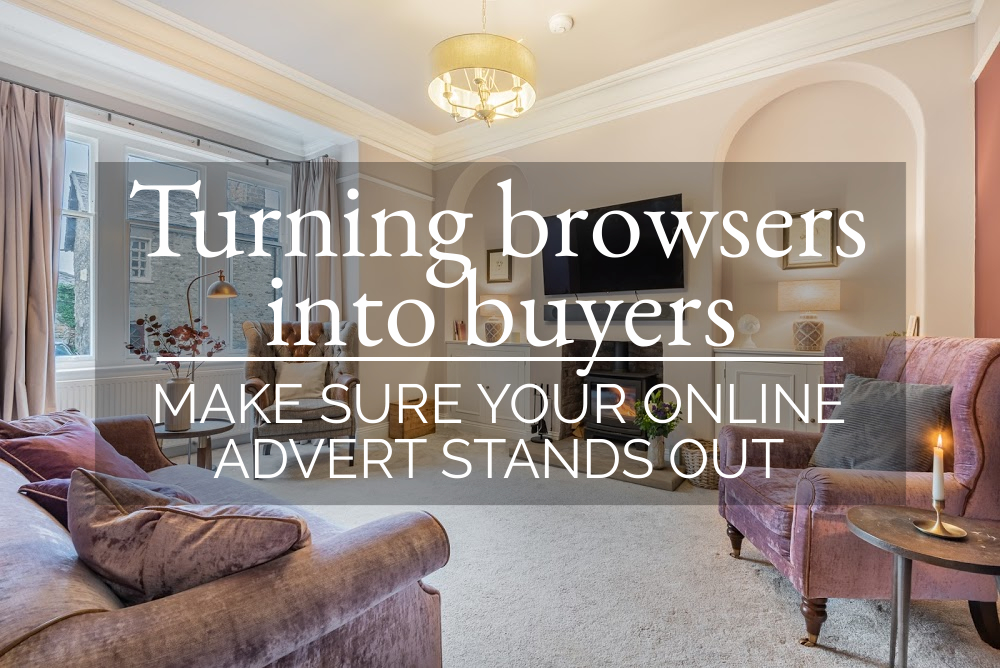
Turning browsers into buyers – make sure your online advert stands out

If you’ve ever searched online for a home yourself, you’ll know how many listings there are. The broader your search terms, the more results are going to come up, and then you start scrolling through…

So, what is it that makes you stop scrolling?

When you’re selling, how do you make sure your headline details stand out from the rest so that buyers click to find out more? Importantly, is the rest of your listing good enough to grab their interest and make them want to book a viewing?

The trick is getting the right balance of images and words: enough to whet people’s appetite so they’re keen to view, but not so much that they feel they’ve already seen everything your home’s got to offer. If you overdo the information, buyers could just put you on their shortlist and keep scrolling. Remember, the whole point of marketing is to get people through the door – so make them want more!

Photographs

Photographs are one of the most important features of your online advert. Around 90% of the information processed by our brains is visual, and we take it in tens of thousands of times quicker than text, so you really can’t overestimate the power of a great set of photos. Your main image should be your finest full shot of the front – and taking it at twilight with all the interior lights on can create a truly striking impression.

Then have between six and ten great photos of the inside and garden. You’ve got to show buyers the main rooms and some of the best features, leaving them excited about discovering the parts they haven’t seen.

Make sure your agent uses a professional photographer who can not only take the shots well, but also work with your agent’s team who are styling your home to create the best possible images. Interior shots look best taken on a bright day, so the photographer may need to make another visit to capture the all-important exterior twilight shots that will help ensure you have a great selection of images.

Buyers tend to connect with things that are both familiar and aspirational, so think about how different rooms look in glossy homes magazines and use that as a guide.

Here are some of the things you can do to get your home ready before the photographer and styling team arrive:

  1. Vacuum and dust
  2. Clean the windows and mirrors
  3. Empty all the bins and put away your half-used toiletries
  4. Tidy away any work, toys and kitchen clutter
  5. Have some new candles, plants and/or flowers in the main reception rooms
  6. Fill a fruit bowl for the kitchen
  7. Straighten/plump up soft furnishings and towels
  8. Take away rugs (plain floors make rooms look bigger)
  9. Make sure all the light bulbs work, and have some spares, just in case!
  10. Mow the lawn, prune the shrubs and flowers, and spruce up the garden furniture.

Then do your best to keep your home looking like that until it sells!

When your agent forwards the brochure for you to review, one thing to make a particular point of checking is whether the photographs flow ‘naturally’. Think about the route a viewing would take through your home and try to make sure the photographs follow that order, as far as possible. For example: the front exterior shot, then the hallway, followed by the living room, the kitchen, the staircase, the master bedroom, and so on. If the order makes sense, it will be easier for the buyer to visualise your home and may help create a stronger first impression.

The written details

Your headline and summary paragraph need to say what your home is, show where it’s located and make its best features shine in a way that entices potential buyers to look for more details. So, if your home is ideal for a family, highlight things like a fabulous open dining kitchen, games room, large garden and proximity to schools.

Then the bullet points should be between six and ten things that ‘snapshot’ the biggest selling features of your home. You’re trying to give buyers reasons to book a viewing, so make sure each point is a real benefit, for example:

  • Unobstructed views across open countryside
  • Master suite with private, south-facing balcony
  • 24’ modern dining kitchen with Miele appliances and Rangemaster cooker
  • Versatile, open-plan reception space
  • Soundproofed home office with separate entrance.

Once people have seen the bullet points and been dazzled by your photographs, chances are they’re pretty much decided on whether to view. So, although they may want a little more information, they won’t want to have to scroll through reams of paragraphs describing every last detail.

The best approach is to have a short and sweet description of each room – the size and key fittings that will be included in the sale – and then any other particular features, like an incredible view, unique architectural detail or tech feature. At this stage, buyers really don’t need to know how many sockets or window locks there are; you’re just trying to get them interested enough to book a viewing, so stay focused on the key selling points.

Floor plans & PDF brochure

Floor plans really help buyers put room sizes into perspective and see whether the layout could work for them. They’re more-or-less standard these days, so make sure your listing has one.

Once you’re happy it’s correct, there are three things to check:

  1. There’s a compass rose so buyers can easily see which rooms and areas of the garden face south
  2. The total square footage is stated – that helps buyers compare homes to see how much space they’re getting for their money
  3. The image opens at a decent size online.

A digital version of your full brochure should also be available as a downloadable PDF that buyers can save and print out. Although the agent may provide a hard copy at the viewing, many people like to check the brochure in advance to see if there are any photos or other information they might have missed – and it’s also useful for them to make notes on.

You’ve grabbed their attention – what next?

If you’ve ticked off everything so far, you should have buyers who are really keen to view. You’re halfway there. Now this is where the personal and professional skills of your agent come into play, to turn enquirers into buyers.

The buyer calls your agent

Some people know for sure that they want to view and they’re just calling to arrange the appointment. Other people have questions, and this is where an enthusiastic agent who’s familiar with your home can really help increase the buyer’s interest and firm up a viewing. So, check with your agent to make sure every member of staff has viewed your home and been briefed on any other relevant information, like whether you’ve found an onward purchase.

Whoever’s handling the enquiry should also qualify the person viewing, checking how they’re going to be funding their purchase and whether they have a home to sell. If you’ve found a new place you’ve fallen in love with and the person who wants to view hasn’t even put their own home on the market yet, there might not be much point booking an appointment. On the other hand, if they’re a cash buyer or they’ve sold and their buyer is desperate to proceed, they could be the perfect fit!

The buyer views your home

We’d suggest it’s always better to let your agent carry out accompanied viewings. Our experience means we know what information to give and how to sell the best features of your home; also, importantly, when the owner’s not there, buyers tend to feel more relaxed and talk more freely. That means we can usually get good feedback there and then and possibly even start negotiations on the spot.

Turning an offer into a sale

When a buyer really loves a home – and if your agent has done their job selling it! – they’ll often make an offer even after just one viewing. Your agent then has to negotiate the best possible price on your behalf, keeping you informed of every offer.

If your online listing is up to scratch and you’ve got your home looking its best, you should have plenty of interest. And if necessary, your agent can use feedback from viewings to make tweaks to your marketing along the way to ensure you’re appealing to as many buyers as possible. (See our recent blog, ‘What to do when your home isn’t selling’.)

Whether you’re already on the market or just thinking of selling, you can call us at any time for advice or to arrange a valuation – we’d love to hear from you! Call on 01772 252136 or email info@stonehousehomes.co.uk , and one of our team will get right back to you.

Posted on

What to do when your home isn’t selling – 8 steps to boost your marketing

You did it: you found an agent you liked, who loved your home and valued it at a price you were happy with. They put together an impressive marketing plan and the ‘For Sale’ board has been invitingly positioned at the end of the drive for a while. It seems like you’ve done everything right, so why hasn’t your home sold yet?

Well, it could be a few different things. Some people believe it comes down to the price – and often that is a reason – but it’s not the only possibility.

So how do you find out what’s stopping your home from selling, and what can you do to kick-start some real interest?

  1. Check out the competition

Before you speak to your estate agent, it’s a good idea to gather some information about what’s going on around you. Have a search online for homes in the area similar to yours and see how they compare. What’s the presentation like and have they had to reduce their price? That should give you an idea of whether your marketing is along the right lines.


  1. Call your agent

Have an honest conversation about your concerns. Ask your agent why they think your home’s not selling and what can be done to get things moving in the right direction.


  1. Find out what people think of your home

Although the expertise of a good agent is invaluable, there’s also nothing quite like a bit of honest feedback. If your agent is on the ball, they should be asking everyone who views your home what they thought about it, then calling you to discuss whether any changes might need to be made to the marketing.

If viewers thought the price was too high, what was the reason? If they thought there was a bit too much work to do, is there something you could fix or improve yourself for very little cost? In short, is there anything you can do to address the feedback that will make your home more attractive to buyers so they start making offers?

  1. Could you improve the presentation?

Have another look at your home with a critical eye and ask yourself if it’s really looking its best. Your agent might already have offered their advice on how to style and present it for viewings, but maybe you could ask a friend to ‘view’ and give you their honest opinion about any positive changes you could make.

One important thing to think about is: do all the rooms make sense for a buyer? You might have a conservatory that’s become a toy store for your family, but when you’re trying to sell, you’ve got to make every bit of space appear as valuable as possible. So, put away the toys and show the real potential of your conservatory. You could style it as:

  • a sunroom, somewhere perfect for curling up with a book
  • a dining room that makes mealtimes a bit more special
  • even a second sitting room, to give parents and children their own spaces.

Likewise, if you have a small bedroom that you use as a walk-in wardrobe, pack away your clothes and stage it as a single room so that buyers can see exactly what value they’re getting for their money.

While the inside might be sparkling, you’ve got to make sure the outside always creates a great first impression so that buyers feel good about your home before they even walk through the door. Some people do a drive-by before booking an appointment to view inside, so keep on top of your home’s ‘kerb appeal’. Make sure the lawn, shrubs and plants are tidy; sweep the drive and path; give the front door a weekly wipe-down – and don’t forget your ‘For Sale’ board. Check it’s straight and clean, and report any damage to your agent so they can have it replaced.


  1. Refresh your marketing

Are the photos your agent took really showing your home in the best light? Do they grab your attention or could they be improved? Even if they’re already perfect, if your home’s been on the market for a couple of months and the seasons have changed, buyers will be able to see that your exterior shots were taken some time ago.

Having new photos taken is an easy and effective way to reinvigorate your marketing. Go for a bright, sunny day and get the front shot from a few different angles so you’ve got options for changing the leading image online every now and then. Ask your agent if they can film an up-to-date video tour, and check whether they’re using the best apps and software.

It’s also a good idea to update the copy in your advertising, particularly the headline, and make sure your home’s best qualities really stand out.


  1. Drop the price

To get the best possible price for your home, try all the above before you look at a reduction. Have viewers said it’s too expensive, or are other similar homes also having to drop their prices because there’s an oversupply at the moment? If you do decide to go for a reduction, make it worthwhile. As a general rule, if a home was going to sell within 5% of its current price, someone would have made an offer already, so bring it down to a level that’s genuinely going to get more buyers interested.


  1. Take a break from the market

If you don’t desperately need to sell, taking your home off the market for a little while can be quite effective, particularly if you come back with a new price, new photos and perhaps a new agent. Certain times of the year are quieter than others, and a good agent will know about seasonal and current trends and be able to recommend the best time to come back onto the market.

Taking a break doesn’t have to mean your home’s not for sale, just that it’s not actively advertised. Your agent can keep the details ‘under the table’ and still give them to people they think might be interested, so you don’t miss out on your perfect buyer.


  1. Switch agents

Sometimes an agent just isn’t the right one for you and your home. Perhaps they were enthusiastic at first, but now they don’t seem that motivated and you suspect they may have been over-confident with the price. Maybe they’re trying their best, but don’t have the right marketing skills. Or it could be that they’re simply not communicating with you.

Bottom line, it could be time for a fresh start with a new agent.

The relationship between an agent and their client is important – this is a significant transaction and you’re going to be working together to achieve the best possible sale. So, as well as making sure the agent you choose has a track record of selling homes like yours and a clear marketing plan, pick someone you really like. If they’re enthusiastic and positive about your home, they’ll pass that on to potential buyers and you’ll have the best chance of a successful viewing.


If you’re ready to move on to a new home and need a marketing boost to help sell your current one, call us on 01772 252136 or email info@stonehousehomes.co.uk and we’ll happily talk through what we think could make a real difference. No matter what the challenge is, there’s always an answer!

Posted on

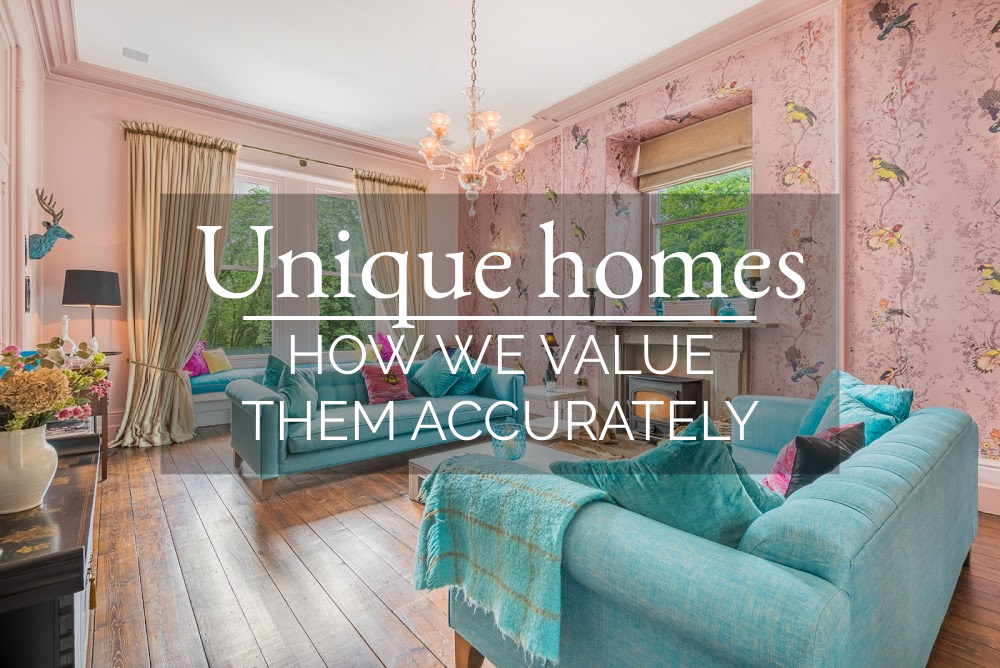
Unique homes – how we value them accurately

As estate agents, valuing homes accurately is at the core of our business. We’ve got to price them at a level that attracts enough attention from buyers, while achieving the maximum sale price for our clients, and sometimes it’s a challenge – particularly when there’s not much to compare them to.

We value homes based on a combination of factors. We look at recent data, consider what we know about current market conditions, sprinkle in price per square foot, then use our expertise to judge how popular your particular home is likely to be with buyers.

While it’s relatively straightforward to value a home if a lot of similar ones exist, it can be much harder to put a price on a unique home. Deciding how much a particular view or architectural style is worth in a certain location is not an exact science, which is why it’s especially important to choose the right estate agent when your home is one of a kind.


Let’s look in a bit more detail at how we arrive at a market value:

Data on comparable homes

The first thing we need to know is the value of other homes that compare to yours – ones of a similar size, in a similar location, with similar features. While there are usually plenty of direct comparables for homes on estates or Victorian terraces, the challenge with unique homes, where there might be very little else like them, is getting as close as possible. The more unique the home, the greater the challenge!

We look at two types of data:

  • Sold prices: How much have comparable homes sold for in the last 3–6 months? If there aren’t many of them, we sometimes have to look back further in time, then calculate a likely current value based on average price increases. Sold price data from the Land Registry is the main source for surveyors when they make their reports for mortgage lenders, so it carries significant weight.
  • Current market prices. We look at similar homes for sale and consider:
  1. How long have they been on the market?
  2. What’s the current asking price?
  3. Has the price been reduced?

Generally speaking, we expect to agree a sale at within 5% of the asking price, but the longer a home is on the market, the less likely it is to achieve this.

Together, these two sources give us a ballpark price guide.

You might be wondering about online instant valuation tools, like the one we have on our site http://bit.ly/Stonehousevaluation , which use this kind of data to come up with a current price for your home. They’re becoming increasingly popular and can be useful if lots of similar homes have sold recently. But when it comes to unique homes, we find the results are often quite different to in-person valuations. There might only have been a handful of properties sold recently in the area that are even close to yours in size and style, and it’s almost impossible for a piece of technology to put an accurate value on a view or a one-off architectural feature. Data is certainly helpful in giving us a guide, but it’s by no means the whole story when it comes to unique homes!

One important thing for us to bear in mind is the ‘ceiling’ – the top price that comparable homes have sold for. If we value your home at more than this, there’s always a risk it might be too expensive, and when buyers think a home is overpriced, it tends to put them off. However, unique homes can often break through the ceiling and attract a higher selling price, simply because there’s nothing else like them.


Price per square foot

Not a commonly used valuation tool, but an invaluable one. It doesn’t take into account all the amazing amenities, like a stunning view, or even some disadvantages like a footpath right through a garden. Still, some buyers like seeing exactly how much they’re getting for their money.

Anything attached to the main home is included in the total price per square foot; however, most detached buildings aren’t, unless it’s an additional dwelling – a holiday home for example.

Price per square foot is different for each area. It provides a good general overview of what a home is worth. At least on paper.


Current market conditions

Prices depend on supply and demand. When there are fewer homes on the market, prices tend to go up as there’s plenty of competition from potential buyers. The best homes can often attract a ‘bidding war’ and end up selling for over the asking price. On the other hand, if there are fewer people looking to buy when more people want to sell, prices tend to fall. That’s because buyers have a good amount of choice and will be more tempted to try and get a bargain by making an offer below the asking price.

So, in order to put the right market value on your home, we need to know how many buyers out there are looking for a home like yours. Are similar homes selling quickly or is there an oversupply right now?

While unique homes are usually less affected by rises and falls in the market, it’s still important for us to know what’s happening, as it gives us a feel for how positive we can be with our valuation.


Our expertise

Taking all the above into account, we then have to judge how attractive your home is likely to be to buyers. We’ve got to look at the outstanding features and decide how valuable they are, then balance that with what we know about how much potential buyers are willing and able to pay. There might be lots of things that set your home apart, but would someone be willing to pay more for it than for its closest competitor, and how much more? This is where our experience really matters.

A lot comes down to how rare the features are, particularly when you’ve got a combination of them. For instance, if you have a beautifully refurbished Grade 1 listed home in a waterfront location, how many other homes like that are there in the area – more importantly, how often do they come up for sale? When a buyer knows that if they miss out on your home, they might not get another chance to buy something similar for another five or ten years, they’re usually willing to pay a premium. And it’s our job to know how much that premium is.

The final thing we need to consider is your own position. How quickly do you want or need to sell? If you’re not in a rush to find a buyer, we might think it’s worth being optimistic with the price, then we can always adjust it if needed. On the other hand, if you’d like to sell as quickly as possible, we’ll recommend a price that we’re sure will immediately catch your target buyers’ attention.

So, if you’ve got a unique home, choose an experienced local agent who’s got a track record of successfully selling one-off homes. Search online to see what’s sold locally in the past couple of months and take note of which agents have handled the more individual sales. They’re the ones who should be able to see the true value of your home, properly judge its market potential and then help you achieve the best possible sale.

If you’re ready to move or are currently on the market and haven’t yet had the response you’d hoped for, give us a call on 01772 252136 or email info@stonehousehomes.co.uk. We’ll be happy to chat through our tailored marketing approach for unique homes and, if you’d like to talk in more detail or have a valuation, we can arrange for someone from our team to visit you at home.